Showing posts with label prayer. Show all posts

Sunday, February 19, 2012

A Cardiologist & the Spiritual Life

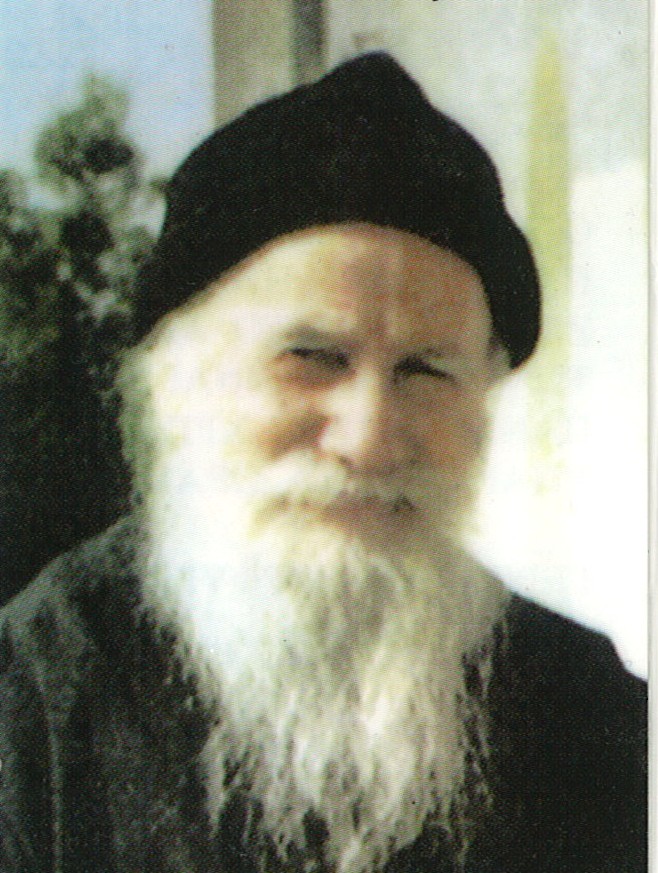
Dr. George K. Papazahos, Assistant Professor of Cardiology at the University of Athens, served as one of Elder Porphyrios' physicians.  The following testimony of Dr. Papazahos regarding Elder Porphyrios is included in the book, Elder Porphyrios: Testimonies and Experiences by Klitos Ioannidis (Athens: Holy Convent of the Transfiguration of the Savior, 2007), translated from the Greek 5th edition.  The testimony previously appeared in Synaxis (January-March, 1992, pp. 93-97):


"Here I will mention a self-diagnosis of himself.  He verified changes in his electrocardiograph without a cardiograph machine.  One night, he called me up quite concerned, 'Come here, late as it is, to see the changes in the cardiograph.  I was in pain many times today, and the pain was anginal.' Indeed, I ascertained that there were ischaemic changes (to arteries V3-V6) and I asked him under what kind of stress he was today.  He began to cry and with frequent interruptions he began describing something in detail to me.  He was seeing scenes from the street fighting in Romania.  It is was the day when the people rose up against Ceaucescu.  With his gift he saw the shootings and the deaths in the squares just like they were being published in the newspapers the following day.  He continued to cry, and I begged him to ask God to take away this vision.  His heart was in a dangerous state because of the stress.  His blockage could get severe.
     I found myself in the same kind of stress while witnessing the sensitivity of the 'other' heart of a saint.  I avoided looking at the cardiograph and thought to myself, 'What meaning does this nitrite anti-angina medicine that I am about to give you have for you, Elder? You're not of this world.  Your heart is beating in Oropos and is living in Romania.  On the ECG the heart is shown with an ischaemic "condition" at the ST interval, but in reality can be found "resurrected" to the heavens.'  I left there quite late, trembling because I had seen a little of the light of a saint." (268)


Elder Porphyrios "never refused the medical help of the many doctors who were also his spiritual children.  In fact, one day I asked him, 'Why do many spiritual people, especially monks, refuse medical help, thinking that the Panagia will help them quickly?'  He answered.  'It's egotism. It's the work of the Evil One, thinking that God will make an exception amongst all the others and will miraculously intervene for you.  God performs miracles, but you should not expect one for yourself.  It's selfishness.  On the other hand, God Himself acts through the doctors. 'The Lord gave us physicians and medicine,' says the Holy Scripture.'" (267)


"The Elder, as a doctor, did not only 'see' my physical ailments, he concerned himself with my many spiritual imperfections, too.  He tried to help me find humbleness.  One afternoon he telephoned me at my office immediately after a couple of patients had expressed their extreme love for me for the care I gave them.  I recounted his words, 'George, It's the Elder.  Both of us are going to hell together.  We'll hear, "You fool, this very night your soul is being demanded from you."  You enjoyed the good things in life.  "And the things you have prepared whose will they be?"'  I interrupted him, 'What did we enjoy in this life, Elder?  The broken down car, the empty bank account or the non-existent sleep?'  He answered abruptly, 'What's that you're saying? Don't people tell you what a good doctor you are?  You love us.  You take care of us.  You don't skin us alive. And you welcome this praise, you swallow it down.  Eh, you've already lost your reward.  The same thing happens to me.  They tell me that I have "gifts", how I can touch them and perform miracles, that I'm holy. And I gulp it all down, weak fool that I am. Eh, that's why I told you that both of us are going to hell.'
     'If we're going to go together,' I replied, 'let's go to hell too!'  And he hung up the phone saying, 'I'm speaking to you seriously and you're always joking. Good repentance to the both of us.'
     One day I was downcast, thinking that most of my life has gone by pointlessly in the midst of useless daily details.  The Elder telephoned me and lifted my spirits with two or three of his expressions, 'Doctor, did you ever hear the phrase, "they will not taste death?"  We can, if we wish avoid death.  All we have to do is love Christ.  You, "with all your heart", Mr. Cardiologist.'  He laughed." (270-271)

Tuesday, January 3, 2012

Benefiting from Illness through Prayer

"We benefit greatly from our illnesses, as long as we endure them without complaint and glorify God, asking for His mercy.  When we become ill, the important thing is not that we don't take medicines or that we go and pray to Saint Nektarios.  We need also to know the other secret, namely, to struggle to acquire the grace of God.  This is the secret.  Grace will teach us all the other things, namely, how to abandon ourselves to Christ.  That is, we ignore the illness, we do not think about it, we think about Christ, simply, imperceptibly and selflessly and God works His miracle for the good or our soul.  Just as we say in the Divine Liturgy, 'we commend all our life to Christ our God'" (227-228).


"The whole secret is faith -- without doubts, gentle, simple and artless: in simplicity and artlessness of heart.  It is not a question of 'will power' or 'mind over matter'.  A fakir can display this kind of 'will power'.  It is a question of having faith that God loves us with infinite love and wants us to become His own.  That is why He allows illnesses, until we surrender ourselves in trust to Him" (228-229).  


*Footnote on p. 224: "Elder Porphyrios suffered from the following illnesses: myocardial infarction (anterior diaphragm with lateral ischaemia), chronic kidney disease, duodenal ulcer (with repeated perforations), operated cataract (loss of lens and blindness), herpes zoster (shingles) on the face, staphylococcus dermatitis on the hand, inguinal hernia (frequently strangulated), chronic brochitis and cancer of the pituitary gland."


Selections from Wounded by Love: The Life and the Wisdom of Elder Porphyrios, trans. by John Raffan (Limni, Evia, Greece: Denise Harvey, 2005).  Image source: Orthodoxwiki.org

Sunday, November 20, 2011

The Entrance of the Theotokos

On November 21st of every year, the Orthodox Church celebrates the Feast of the Presentation of the Theotokos into the Temple.  The Feast commemorates the entrance of the Virgin Mary into the Holy of Holies of the Temple in Jerusalem when she was three years of age.  Having been dedicated to God by her aged parents, Joachim and Anna, she remained in the Temple until she reached womanhood and was betrothed to the elderly widower, Joseph, who protected the Virgin chosen to be the Mother of God.  In a beautiful sermon, St. Gregory Palamas sets forth the Virgin Mary as an example of a healthy soul who attained to the heights of the spiritual life.  Here is an excerpt from that sermon:


"With profound understanding she listened to the writings of Moses and the revelations of the other prophets when, every Saturday, all the people gathered outside, as the Law ordained.  She learnt about Adam and Eve and everything that happened to them: how they were brought out of non-being, settled in paradise and given a commandment there; about the evil one's ruinous counsel and the resulting theft; about their expulsion from paradise on that account, the loss of immortality and the change to this way of life full of pain.  In addition, she saw that as time passed, life continued under the inherited curse and grew even worse, God's creature made in His image was estranged from the Creator and became more and more closely associated with the one who had evilly schemed to crush him.  (Alas for the evil one's power over us and his insatiable rage against us!  Woe to our insensitivity and our inclination to return to the earth!)  No one was capable of putting an end to this impulse which brings destruction on all men alike, or to the uncheckable rush of our race towards hell.  When the holy Virgin Maid heard and understood this, she was filled with pity for humanity and, with the aim of finding a remedy to counteract this great affliction, she resolved at once to turn with her whole mind to God.  She took it upon herself to represent us, to constrain Him Who is above compulsion, and quickly draw Him towards us, that He might remove the curse from among us, halt the advance of the fire burning men's souls, weaken our enemies, answer our prayers, shine upon us with light that never sets and, having healed our sickness, unite His creatures with Himself."


I highly recommend that Orthodox Christians read the sermon in its entirety for their edification.


St. Gregory Palamas, "On the Entrance into the Holy of Holies II," Mary the Mother of God: Sermons by Saint Gregory Palamas, ed. by Christopher Veniamin (South Canaan, PA: Mount Thabor Publishing, 2005), 41.

Saturday, November 19, 2011

St. Athanasius on Christ the Physician

"What man that ever was, for instance, formed a body for himself from a virgin only?  Or what man ever healed so many diseases as the common Lord of all?  Who restored that which was lacking in man's nature or made one blind from birth to see?  Aesculapius was deified by the Greeks because he practiced the art of healing and discovered herbs as remedies for bodily diseases, not, of course, forming them himself out of the earth, but finding them out by the study of nature.  But what is that in comparison to what the Saviour did when, instead of just healing a wound, He both fashioned essential being and restored to health the thing that He had formed?" 


- St. Athanasius the Great, "Refutation of the Gentiles," On the Incarnation (Crestwood, NY: SVS Press), 1998), 87.

Wednesday, September 7, 2011

St. Syncletica on Illness & Joy

St. Syncletica of Alexandria is one of the holy Desert Mothers of the 4th century.  (She is often referred to as Mother, or "Amma" Syncletica).   You can read about her life on the website of the Antiochian Archdiocese.  Here is one of her sayings:

"She also said, 'If illness weighs us down, let us not be sorrowful as though, because of illness and the prostration of our bodies we could not sing, for all these things are for our good, for the purification of our desires.  Truly fasting and sleeping on the ground are set before us because of our sensuality.  If illness then weakens this sensuality the reason for these practices is superfluous.  For this is the great asceticism: to control oneself in illness and to sing hymns of thanksgiving to God.'"


The Sayings of the Desert Fathers, trans. by Benedicta Ward (Trappist, KY: Cistercian Publications, 1984), 232.

Wednesday, August 24, 2011

Prayer for One Who Has Shameful Thoughts

A Prayer for One Who Has Shameful Thoughts

O Master, Lord my God, in whose hands is my destinty: help me according to Thy mercy, and leave me not to perish in my transgressions, nor allow me to follow them that place desires of the flesh over those of the spirit.  I am Thy creation; disdain not the work of Thy hands.  Turn not away, be compassionate and humiliate me not, neither scorn me, O Lord, as I am weak.  I have fled unto Thee as my Protector and God.  Heal my soul, for I have sinned against Thee; save me for Thy mercy's sake, for I have cleaved unto Thee from my youth; let me who seek Thee not be put to shame by being rejected by Thee for unclean actions, unseemly thoughts, and unprofitable remembrances.  Drive away from me every filthy thing and excess of evil.  For Thou alone art holy, alone mighty, and alone immortal, in all things having unexcelled might, which, through Thee, are given to all that strive against the devil and the might of his armies.
     For unto Thee is due all glory, honor and worship: to the Father, and to the Son, and to the Holy Spirit, now and ever, and unto ages of ages.

From The Great Book of Needs, Vol. 3 (South Canaan, PA: St. Tikhon's Monastery, 2002), 47.

Friday, August 5, 2011

A Prayer of Healing for the Soul

Make me whole, O Lord, and I will become whole!  On only wise and merciful Physician, I beseech Thy benevolence: heal the wounds of my soul and enlighten the eyes of my mind that I may understand my place in Thine eternal design!  And inasmuch as my heart and mind have been disfigured, may Thy grace repair them, for it is as true salt.
     What shall I say to Thee, O Knower of the heart who searchest the heart and inner workings of men?  Indeed, Thou knowest that, like a waterless land, my soul thirsts after Thee and my heart longs for Thee.  And Thy grace has always sated those that love Thee.
     Thus, as Thou has always heard me, so now do not scorn my prayer.  For Thou seest that my mind, like a prisoner, seeks Thee, the Only true Savior.
     Send Thy grace, that it may satisfy my hunger and quench my thirst.  For insatiably do I desire Thee, O my Master!  And who can have enough of Thee if he truly loves Thee and thirsts for Thy truth?
     O Giver of light!  Fulfill my supplications and grant me Thy gifts according to my prayer; impart to my heart just one drop of Thy grace, that the flame of Thy love may begin to burn in my heart; and, like a fire, may it consume evil thoughts like thorns and thistles!
     Give me all this in abundance; grant it to me as God unto man, as the King to His subjects, and increase it as a kind Father.

- A prayer by St. Ephraim the Syrian


Psalm 3 in A Spiritual Psalter or Reflections on God, Excerpted by Bishop Theophan the Recluse from the Works of our Holy Father Ephraim the Syrian Arranged in the Manner of the Psalms of David, trans. by Antonia Janda, (Liberty, TN: St. John of Kronstadt Press, 2004), 17.  

Wednesday, August 3, 2011

Paraklesis to the Most Holy Theotokos

The Paraklesis to the Most Holy Theotokos is a supplicatory service chanted in Orthodox churches to honor the Theotokos and ask for her intercessions on behalf of the living.  The service is chanted during the Dormition Fast in August and may be chanted at other times as needed. The text of the Small Paraklesis, authored by Theosterictus the Monk in the 9th century, is available on the Greek Archdiocese of America website. More information on the Paraklesis is published on Orthodoxwiki.

Here is a selection from the service (Ode 6):

"I pour out my supplication before the Lord, and I speak of my sorrows before Him.  For my soul has been filled with evils, and my life has approached Hades.  Wherefore, I supplicate Thee like Jonah, crying out: 'Raise me up from corruption, O my God.'

Most Holy Theotokos, save us!

Intercede with thy Son and God, O Virgin, who by delivering Himself to death, He saved from death and corruption, our nature overtaken by death and corruption, that He may deliver me from the evil harm of the enemies.

Most Holy Theotokos, save us!

We have known thee to be an intercessor for our lives, a sound protection, a remover of different trespasses, and a vanquisher of the wiles of demons, O Virgin.  Wherefore, we beseech thee ceaselessly, to deliver us from the corruption of our passions.

Glory to the Father, and to the Son, and to the Holy Spirit!

We have possessed thee as a wall of refuge, O Maiden, and as a complete salvation for our souls, and a comfort from distress.  We always rejoice in thy light.  Wherefore deliver us now, O Lady, from passions and sufferings.

Both now and ever, and unto ages of ages, Amen!

Since we lie now on the bed of infirmities, and there is no healing for our bodies. O thou who didst give birth to God, the Savior of the world, and Remover of sicknesses, we beseech thee, O righteous one, to raise us from the corruption of ills."

(The above selection from the Paraklesis service (Ode 6) has been taken from the translation used in our parish.)

Friday, July 29, 2011

St. Ephraim the Syrian: Healing Tears of Repentance

Psalm 74

"Who will cure my soul if not Thou, O Christ, the only Physician of souls!  Where will I find a remedy for the disease of my soul, if not with Thee, O fountain of healing!  Thou Who dist cure the ailing woman, cure also my soul from the ruin of sin.
     May Thy compassion descend on me and help me to overthrow the enemy.  Fortify me who am infirm by the strength of Thine arm, and the Evil One will be ashamed when he sees that I am prepared for battle.  Animate me and the Evil One will be humiliated.  In shame will he be turned back, and I will glorify Thy name.
     Accept the tears of my wretchedness and blot out the record of my debts, and again will the enemy be ashamed, seeing that Thy loving-kindness has destroyed the fruit of his wicked deeds and that I will not be punished.
     May Thy compassion come to mine aid, that I might pass safely through the realm of temptation, and that I might thereafter be close to Thee, with Thee always.
     My sinful soul will glorify Thee and Thy Father and the Holy Spirit, for she has wept and been heard, and, washed with tears of repentance, she has been made a temple inhabited by the Divinity Which has created the world."

Psalm 112

"O Giver of all good things, O fountain of healing and treasure of compassion, Thou only good and kindhearted God, Who ever grantest good things to those who ask!  I beseech Thee, that Thine abundant grace might descend upon me and gather together my mind and heal my hidden sores anew, for distractions and wandering thoughts constantly renew my secret sores.
     O long-suffering Lord Who ever curest with grace and compassion, heal the great spiritual infirmities that are within me, a sinner!
     I have nothing to give Thee, O Master, in return for Thy cures.  And what price could be put on Thy cures?  Neither heaven nor earth can give a reward worthy of them.  It is impossible to purchase these holy heavenly cures, for they are priceless.  Thou givest them only in return for tears, O our Savior; and in return for bitter weeping dost Thou grant them to all.
     O my Master, grant me who am unworthy daily tears and strength, that my heart, enraptured and streaming forth fountains of tears, might be ceaselessly illuminated by pure prayer, and that a few tears might blot out the weighty record of my sins, and a small measure of weeping might extinguish the fire that burns therein.  For if I weep here, there will I be delivered from inextinguishable fire."


*Note: The shedding of tears does not refer to just crying due to emotional sadness, but the shedding of tears due to sorrow for one's sins, true humility, and genuine repentance (a sincere desire to turn away from sin that brings sickness and to turn toward God, Who heals.) One who prays with this disposition invites the transforming, Life-Giving Divine Grace into his heart.     


A Spiritual Psalter or Reflections on God, Excerpted by Bishop Theophan the Recluse from the Works of our Holy Father Ephraim the Syrian Arranged in the Manner of the Psalms of David, trans. by Antonia Janda (Liberty, TN: St. John of Kronstadt Press, 2004), 127-128, 179180.


The icon shows St. George, St. John of Damascus, and St. Ephrem the Syrian


Wednesday, July 27, 2011

Prayerfully Giving Thanks in All Situations

The Apostle Paul wrote to the Christians in Thessalonica, "Rejoice always, pray without ceasing, in everything give thanks; for this is the will of God in Christ Jesus for you" (Thess. 5.16-18).  As Orthodox Christians we are indeed called to always give thanks to God through prayer in all situations, even in difficult situations.  We are not near-sighted, but see our present position in terms of our future destination.  With this attitude, St. Paul wrote to the Christians in Rome, "I consider that the sufferings of this present time are not worthy to be compared with the glory which shall be revealed in us" (Rom. 8.18).

In one of his homilies, St. John Chrysostom includes a prayer of thanksgiving for all things said by "a certain holy man." We may also use this prayer to express our thankfulness to God whatever the situation:


“I know a certain holy man who prayeth thus. He used to say nothing before these words, but thus,

We give Thee thanks for all Thy benefits bestowed upon us the unworthy, from the first day until the present, for what we know, and what we know not, for the seen, for the unseen, for those in deed, those in word, those with our wills, those against our wills, for all that have been bestowed upon the unworthy, even us; for tribulations, for refreshments, for hell, for punishment, for the kingdom of heaven. We beseech Thee to keep our soul holy, having a pure conscience; an end worthy of thy lovingkindness. Thou that lovedst us so as to give Thy Only-Begotten for us, grant us to become worthy of Thy love; give us wisdom in Thy word, and in Thy fear. Only-Begotten Christ, inspire the strength that is from Thee. Thou that gavest The Only-Begotten for us, and hast sent Thy Holy Spirit for the remission of our sins, if in aught we have wilfully or unwillingly transgressed, pardon, and impute it not. Remember all that call upon Thy Name in truth; remember all that wish us well, or the contrary, for we are all men.

Then having added the Prayer of the Faithful, he there ended; having made that prayer, as a certain crowning part, and a binding together for all. For many benefits doth God bestow upon us even against our wills; many also, yea more, without our knowledge even. For when we pray for one thing, and He doeth to us the reverse, it is plain that He doeth us good even when we know it not.”


* Note: The prayer of the faithful mentioned above is presumably the Lord’s Prayer.


St. John Chrysostom, Homily beginning with Colossians 3.18-25 (Homily X), Homilies on Galatians, Ephesians, Philippians, Colossians, Thessalonians, Timothy, Titus, and Philemon NPNF, Vol. 13.  Online here: http://www.ccel.org/ccel/schaff/npnf113.txt

Thursday, July 21, 2011

A Discussion with Dr. H. Tristram Engelhardt, Jr:

Dr. Engelhardt, MD, PhD, is one of the top bioethicists in the world.  He is the author of The Foundations of Christian Bioethics and Senior Editor of Christian Bioethics journal (Oxford University Press). In a video of a discussion that took place at St. Luke's Orthodox Cathedral in Hong Kong, Dr. Engelhardt talks about the Orthodox Christian practice of medicine and bioethics.  In the video, he mentions "Question 55" of St. Basil the Great's Long Rules, which I previously posted.


This video can also be found on Youtube.

Wednesday, July 20, 2011

Fighting Evil Thoughts: Humility & Prayer

"Evil thoughts afflict the proud soul, and until she humbles herself she knows no rest from them.  When wrong thoughts besiege you, call like Adam upon God, saying, ‘O Lord, my Maker and Creator, Thou seest how my soul is vexed with bad thoughts…Have mercy on me.’ And when you stand before the face of the Master, steadfastly remember that He will give ear to all your supplications if they be for your good.

A cloud blows over and hides the sun, making everything dark.  In the same way, one prideful thought causes the soul to lose grace, and she is left in darkness.  But, equally, a single impulse of humility – and grace returns.  This I have experienced and proved in myself” (441).

“It is very difficult to recognize pride in oneself.  But here are some signs to tell you:  if the enemy (devils) assail you, or wrong thoughts torment you, it means that humility is lacking in you, and so even if you do not realize the presence of pride in you – humble yourself” (447).  
- St. Silouan the Athonite

Archimandrite Sophrony, St. Silouan the Athonite, trans. by Rosemary Edmonds, Chapter 17, “Concerning Intrusive Thoughts and Delusions,” (Crestwood, NY: St. Vladimir’s Seminary Press, 1991).


+     +     +

A Prayer for One Who Has Shameful Thoughts

O Master, Lord my God, in whose hands is my destiny: help me according to Thy mercy, and leave me not to perish in my transgressions, nor allow me to follow them that place desires of the flesh over those of the spirit.  I am thy creation, disdain not the work of Thy hands.  Turn not away, be compassionate and humiliate me not, neither scorn me, O Lord, as I am weak.  I have fled unto Thee as my Protector and God.  Heal my soul, for I have sinned against Thee; save me for They mercy's sake, for I have cleaved unto Thee from my youth; let me who seek Thee not be put to shame by being rejected by Thee for unclean actions, unseemly thoughts, and unprofitable remembrances.   Drive away from me every filthy thing and excess of evil.  For Thou alone art holy, alone mighty, and alone immortal, in all things having unexcelled might, which, through Thee, are given to all that strive against the devil and the might of his armies.  For unto Thee is due all glory, honor and worship: to the Father, and to the Son, and to the Holy Spirit, now and ever, and unto ages of ages.

The Great Book of Needs, Volume 3, trans. by St. Tikhon's Monastery (South Canaan, PA: St. Tikhon's Seminary Press, 2002), 47.

Thursday, July 14, 2011

St. Basil the Great on the Art of Medicine

Selections from St. Basil regarding "Whether recourse to the medical art is in keeping with the practice of piety."

"In as much as our body is susceptible to various hurts, some attacking from without and some from within by reason of the food we eat, and since the body suffers affliction from both excess and eficiency, the medical art has been vouchsafed us by God, who directs our whole life, as a model for the cure of the soul, to guide us in the removal of what is superfluous and in the addition of what is lacking. Just as we would have no need of the farmer's labor and toil if we were living amid the delights of paradise, so also we would not require the medical art for relief if we were immune to disease, as was the case, by God's gift, at the time of Creation before the Fall.. After our banishment to this place, however, and after we had heard the words: 'In the sweat of thy face shalt thou eat thy bread,' through prolonged effort and hard labor in tilling the soil we devised the art of agriculture for the alleviation of the miseries which followed the curse, God vouchsafing us the knowledge and understanding of this art. And, when we were commanded to return to the earth whence we had been taken and were united with the pain ridden flesh doomed to destruction because of sin and, for the same reason, also subject to disease, the medical art was given to us to relieve the sick, in some degree at least."

"Now, the herbs which are the specifics for each malady do not grow out of the earth spontaneously; it is evidently the will of the Creator that they should be brought forth out of the soil to serve our need. Therefore, the obtaining of that natural virtue which is in the roots and flowers, leaves, fruits, and juices, or in such metals or products of the sea as are found especially suitable for bodily health, is to be viewed in the same way as the procuring of food and drink. Whatever requires an undue amount of thought or trouble or involves a large expenditure of effort and causes our whole life to revolve, as it were, around solicitude for the flesh must be avoided by Christians. Consequently, we must take great care to employ this medical art, if it should be necessary, not as making it wholly accountable for our state of health or illness, but as redounding to the glory of God and as a parallel to the care given the soul. In the event that medicine should fail to help, we should not place all hope for the relief of our distress in this art, but we should rest assured that He will not allow us to be tried above that which we are able to bear. Just as in those days the Lord sometimes made clay, and anointed, and bade wash in Siloe, and on other occasions was content with the mere command: ‘I will, be thou made clean’ whereas He left some to struggle against their afflictions, rendering them more worthy of reward by trial, so it also is with us. He sometimes cures us secretly and without visible means when He judges this mode of treatment beneficial to our souls; and again He wills that we use material remedies for our ills, either to instil in us by the prolonged nature of the cure an abiding remembrance of the favor received, or, as I have said, to provide an example for the proper care of the soul. As in the case of the flesh it is essential to eliminate foreign elements and add whatever is wanting, so also, where the soul is concerned, it behooves us to rid ourselves of that which is alien to it and take unto ourselves that which is in accordance with its nature; for 'God made man right and He created us for good works that we might walk in them."

"To place the hope of one's health in the hands of the doctor is the act of an irrational animal. This, nevertheless, is what we observe in the case of certain unhappy persons who do not hesitate to call their doctors their saviors. Yet, to reject entirely the benefits to be derived from this art is the sign of a pettish nature."

"When the favor of a cure is granted us, whether by means of wine mixed with oil, as in the case of the man who fell among the robbers, or through figs, as with Ezechias, we are to receive it with thanksgiving. Besides, we shall view the watchful care of God impartially, whether it comes to us from some invisible source or by a physical agency, the latter, indeed, frequently engendering in us a livelier perception of the favor as coming from the hands of God. Very often, also, the diseases which we contracted were for our correction and the painful remedies we were obliged to submit to formed part of the instruction. Right reason dictates, therefore, that we demur neither at cutting nor at burning, nor at the pains caused by bitter and disagreeable medicines, nor at abstinence from food, nor at a strict regimen, nor at being forced to refrain from that which is hurtful. Nevertheless, we should keep as our objective (again I say it), our spiritual benefit, in as much as the care of the soul is being taught in the guise of an analogy. There is no small danger, however, that we will fall into the error of thinking that every kind of suffering requires medical relief. Not all sicknesses for whose treatment we observe medicine to be occasionally beneficial arise from natural causes, whether from faulty diet or from any other physical origin."

"So, then, we should neither repudiate this art altogether nor does it behoove us to repose all our confidence in it; but, just as in practicing the art of agriculture we pray God for the fruits, and as we entrust the helm to the pilot in the art of navigation, but implore God that we may end our voyage unharmed by the perils of the sea, so also, when reason allows, we call in the doctor, but we do not leave off hoping in God. It seems to me, moreover, that the medical art is no small aid to continency."


St. Basil the Great, “Question 55” in “The Long Rules,” St. Basil: Ascetical Works, trans. by M. Monica Wagner, The Fathers of the Church: A New Translation, Vol. 9 (Wash., D.C.: Catholic University of America Press, 1962), 330-337.  The text of this book is available online in various formats: http://www.archive.org/details/fathersofthechur027835mbp.

Friday, February 4, 2011

St. John Chrysostom: When You Suffer, Do Not Blaspheme, but Give Thanks

"Some people, if they stumble at all, or are slandered by anyone, or fall ill with a chronic disease, gout or headache or any such ailment, at once begin to blaspheme.  They submit to the pain of the disease, but deprive themselves of the benefit.  What are you doing, man, blaspheming your benefactor, savior, protector, and guardian?  Or do you not see that you are falling down a cliff and casting yourself into the pit of final destruction?  You do not make your suffering lighter, do you, if you blaspheme?  Indeed, you aggravate it, and make your distress more grievous.  For the devil brings a multitude of misfortunes for this purpose, to lead you down into that pit.  If he sees you blaspheming he will readily increase the suffering and make it greater, so that when you are pricked you may give up once again; but is he sees you enduring bravely, and giving thanks the more to God, the more the suffering grows worse, he raises the siege at once, knowing that it will be useless to besiege you any more.  A dog sitting by the table, if it sees the person who is eating continually throwing it scraps of food from the table, stays persistently; but if stopping at the table once or twice it goes away without getting anything, it stays away thereafter, thinking that the siege is useless.  In the same way the devil continually gapes at us; if you throw to him, as to a dog, some blasphemous word, he will take it and attack you again; but if you persevere in thanksgiving, you have choked him with hunger, you have chased him away and thrown him back from you.  But, you say, you cannot keep silent when you are pricked by distress.  I certainly do not forbid you to make a sound, but give thanks instead of blasphemy, worship instead of despair.  Confess to the Lord, cry out loudly in prayer, cry out loudly glorifying God.  In this way your suffering will be lightened, because the devil will pull back from your thanksgiving and God's help will be at your side.  If you blaspheme, you have driven away God's assistance, made the devil more vehement against you, and involved yourself even more in suffering; but if you give thanks, you have driven away the plots of the evil demon, and you have drown the care of God your protector to yourself."

St. John Chrysostom, "Third Sermon on Lazarus and the Rich Man," On Wealth and Poverty, trans. by Catharine P. Roth (Crestwood, NY: St. Vladimir's Seminary Press, 1984), 69-70.

Saturday, March 6, 2010

Elder Porphyrios: Overcoming Depression

"Nowadays people often feel sadness, despair, lethargy, laziness, apathy, and all things satanic.  They are downcast, discontent and melancholy.  They disregard their families, spend vast sums on psychoanalysts and take anti-depressants.  People explain this as 'insecurity.'  Our religion believes that these states derive from satanic temptation. 

Pain is a psychological power which God implanted in us with a view to doing us good and leading us to love, joy, and prayer.  Instead of this, the devil succeeds in taking this power from the battery of our soul and using it for evil.  He transforms it into depression and brings the soul into a state of lethargy and apathy.  He torments us, takes us captive and makes us psychologically ill.

There is a secret.  Turn the satanic energy into good energy.  This is difficult and requires some preparation.  The requisite preparation is humility.  With humility you attract the grace of God.  You surrender yourself to the love of God, to worship and to prayer.  But even if you do all in the world, you achieve nothing if you haven't acquired humility.  All the evil feelings, insecurity, despair and disenchantment, which come to take control of the soul, disappear with humility.  The person who lacks humility, the egotist, doesn't want you to get in the way of his desires, to make any criticism of him or tell him what to do.  He gets upset, irritated and reacts violently and is overcome by depression.

This state is cured by grace.  The soul must turn to God's love.  The cure will come when we start to love God passionately.  Many of our saints transformed depression into joy with their love for Christ.  That is, they took this power of the soul which the devil wished to crush and gave it to God and they transformed it into joy and exultation.  Prayer and worship gradually transform depression and turn it into joy, because the grace of God takes effect.  Here you need to have the strength to attract the grace of God which will help you to be united with Him.  Art is required.  When you give yourself to God and become one with him, you will forget the evil spirit which drags at you from behind, and this spirit, when it is disdained, will leave.  And the more you devote yourself to the Spirit of God, the less you will look behind to see the spirit that is dragging at you.  When grace attracts you, you will be united with God.  And when you unite yourself to God and abandon yourself to Him, everything else disappears and is forgotten and you are saved.  The great art, the great secret, in order to rid yourself of depression and all that is negative is to give yourself over to the love of God.

Something which can help a person who is depressed is work, interest in life.  The garden, plants, flowers, trees, the countryside, a walk in the open air -- all these things tear a person away from a state of inactivity and awake other interests.  They act like medicines.  To occupy oneself with the arts, with music and so on, is very beneficial.  The thing that I place top of the list, however, is interest in the Church, in reading Holy Scripture and attending services.  As you study the words of God you are cured without being aware of it.

Let me tell you about a girl who came to me.  She was suffering from dreadful depression.  Drugs had no effect.  She had given up everything -- her work, her home, her interests.  I told her about the love of Christ which takes the soul captive because the grace of God fills the soul and changes it.  I explained to her that the force which takes over the soul and transforms the power of the soul into depression is demonic.  It throws the soul to the ground, torments it and renders it useless.  I advised her to devote herself to things like music which she had formerly enjoyed.  I emphasized, however, most of all her need to turn to Christ with love.  I told her, moreover, that in our Church a cure is to be found through love for God and prayer, provided this is done with all the heart."

A selection from Wounded by Love: The Life and the Wisdom of Elder Porphyrios, trans. by John Raffan (Limni, Evia, Greece: Denise Harvey, 2005), 178-179.

Saturday, February 13, 2010

The Flame of Divine Love: The Last Judgment

In Western society, many people tend to think of God and theology in legalistic terms. We may encounter those who think that God is an angry Judge waiting to punish them for breaking His laws. Contemporary movies and television programs have contributed the erroneous popular vision of God, judgment, Heaven, and hell. American misconceptions regarding hell likely find root, directly or indirectly, in the picture presented in Dante Alighieri’s Divine Comedy and religious ideas generally present in Roman Catholicism and Protestantism. Within the Orthodox Way, however, theological understanding is primarily rooted in the Inexhaustible Love of God.  By teaching the true Orthodox vision of the Kingdom of Heaven and hell, inasmuch as we can comprehend it, within a culture that tends to compartmentalize knowledge and disconnect theological ideas from every-day life, we can help people to acquire an understanding that fits harmoniously within the whole Orthodox theological worldview, embodied in the comprehensive spiritual life of the Church.

Before the beginning of Great Lent, a period of preparation for Holy Pascha (Easter), we commemorate the Last Judgment when we all will stand before God:

When the thrones are placed, and the books are opened, and God sitteth for judgment, O what a fearful sight, as the angels stand in fright, and thy river of fire floweth by! What then shall we do, we men who have come under condemnation by reason, of the multitude of our sins? And as we hear him call the blessed of his Father to his kingdom, and send the sinners to punishment, who will bear that terrible verdict? Wherefore, O Savior and Lover of mankind, alone King of the ages, hasten to me before the end with repentance, and have mercy upon me. (1)

Before we commemorate the Last Judgment, we are prepared by the Sunday of the Tax Collector and the Pharisee, reminding us that the person accepted by God is not the outwardly religious Pharisee, who is filled with pride and judges others as worse sinners than himself, but the humble soul who, feeling the depth of his own spiritual sickness, sincerely and prayfully turns his heart to God in repentance.  We are also prepared by the Sunday of the Prodigal Son, which teaches us that no matter how far we drift from God and squander the good things we have received, if we repent (turning away from what is unnatural toward God), our Loving Father is ready to run toward us, warmly embrace us, and receive us back with joy.

God is Unconditional Love and God is a Consuming Fire.  God is Love and is Fire.  Love and Fire are One.  There is no contradiction here. God's Uncreated Love is Uncreated Fire.  In the prayers of the Church, we ask God not to consume us because of our sins, but to consume our sickness, our deadness, "the thorns of our transgressions," and to purify and illumine our souls.  For those who seek healing, the Uncreated Fire is purifying and transformative.  The Fire consumes all that is unhealthy and barren.  The Fire of God's Love does not cause pain for the purified and illumined, but is the moist breeze of Paradise and refreshing River of Life that brings everlasting joy and peace.

Those who are full of selfishness and pride will not experience God's Love as Paradise.  The unloving will be consumed by Pure Love.  St. Isaac the Syrian explained that

those who are suffering in hell, are suffering in being scourged by love.... It is totally false to think that the sinners in hell are deprived of God's love. Love is a child of the knowledge of truth, and is unquestionably given commonly to all. But love's power acts in two ways: it torments sinners, while at the same time it delights those who have lived in accord with it. (2)

St. Gregory the Theologian wrote from the same perspective, “O Trinity, Whom I have been granted to worship and proclaim, Who will some day be known to all, to some through illumination and to others through punishment!” (3) Likewise, St. Basil the Great said,

I believe that the fire prepared for the punishment of the devil and his angels is divided by the voice of the Lord.  Thus, since there are two capacities in fire, one of burning and the other of illuminating, the fierce and scourging property of the fire may await those who deserve to burn, while illuminating and radiant warmth may be reserved for the enjoyment of those who are rejoicing. (4)

Those whose hearts have been purified, their souls healed, and are filled with divine love become flames united with the Uncreated Flame of Unquenchable Love.  Our goal in this life is summarized in the words of an ancient spiritual father, Abba Joseph, who said, "If you will, you can become all flame."

As the unloving, proud, and impure will be tortured by the presence of Divine Love, they will also be abused by their own souls, a result of their refusal to accept the healing offered to them by their compassionate Creator and Physician. In his “Letter to Publius,” St. Ephrem the Syrian noted that “the gehenna [hell] of the wicked consists in what they see, and it is their very separation that burns them, and their mind acts as the flame.” (5) He explained that “the hidden judge which is seated in the discerning mind has spoken, and has become for them the righteous judge, who beats them without mercy with torments of contrition” and “saliently accuses and quietly pronounces sentence upon them.” (6) The “inner intelligence has been made the judge and the law, for it is the embodiment of the shadow of the law, and it is the shadow of the Lord of the Law.” (7)

The Last Judgment is a reality for each of us, but we are reminded of this reality within the Church as we are also reminded of the Way of the eternal kingdom of God: humility, repentance, love, and prayer. God has planted the Church for the our healing so that we may be united with Him and become radiant torches of Divine Love, Peace, and Joy. For those seeking the healing of their souls and union with God, the images of the Last Judgment assist us in finding humility and focusing on the condition of our own souls with rather than judging others.  Pride is a great enemy that keeps us from seeing ourselves as we really are with sobriety.  We live in a culture wherein we are constantly being tempted to act and think in ways unnatural to our human nature and that are contrary to the path of good health.

The fear of hell can serve to bring us to repentance.  The highest reason for pursuing salvation is love for God, not fear of punishment, but because of our spiritual delusion and the sickness in our souls, fear of separation from God in hell can serve as motivation to overcome our laziness and pursue the Way of spiritual healing that God has given us.  Always being mindful of God's love, we should remember the words of St. Silouan the Athonite, "Keep your mind in hell and despair not."

Since the Last Judgment is a reality, we should not downplay the necessity of repentance as an essential aspect of the healing process in this life.  When someone is facing physical sickness and death, they may be more receptive to hearing about repentance than at other times. Within an Orthodox context, we can help patients facing physical sickness and death achieve deep healing in their souls so that they may experience the Kingdom of Heaven (even in this life) and be resurrected in their physical bodies, not to judgment and spiritual death, but eternal life and joy in body and soul.

While some may not give much thought to the Last Judgment until they face their own mortality, others may possess a rational fear of hell, but without knowledge of God's love.  They may see God as a Judge, but not as a loving Father.  (Perhaps their concept of God has been twisted by exposure to heretical doctrine and/or unhealthy human relationships.)  In such cases, we must help these individuals learn about God's unconditional love for mankind (philanthropia), the Orthodox Way as the path of healing, and our goal of becoming purified, illumined, and united through the unquenchable flames of Divine Love.


(1)  Glory at "Lord, I have cried," Vespers, Sunday of the Last Judgment

(2)   Alexander Kalomiros, The River of Fire, presented at the 1980 Orthodox Conference, sponsored by St. Nectarios American Orthodox Church, Seattle, WA (Seattle: St. Nectarios Press, 1980), quoting St. Isaac the Syrian, Homily 48. The text of The River of Fire is available at http://www.stnectariospress.com. See also Lazar, 8-9.

(3) Metropolitan Hierotheos of Nafpaktos, Life After Death, trans. by Esther Williams (Levadia, Greece: Birth of the Theotokos Monastery, 1996), 259, quoting St. Gregory the Theologian, Or. 23.13, On peace 3, PG 35, 1165B.

(4) Archbishop Lazar Puhalo, On the Nature of Heaven and Hell According to the Holy Fathers (Dewdbey, Canada: Synaxis Press, 1995), 9, quoting St. Basil the Great, “Homily on Psalms,” 28.6; See also Met. Hierotheos, 257.

(5) Ibid., 7-8, quoting St. Ephrem the Syrian, “Letter to
Publios,” para. 21-23. 

(6) Ibid., 8

(7) Ibid.

Saturday, February 6, 2010

St. Symeon the New Theologian: Overcoming Depression

Listen to Fr. John McGuckin speak about St. Symeon the New Theologian on the Orthodox Christian Network (OCN).  Fr. John comments on St. Symeon's very simple instructions for overcoming depression through prayer.

You can read about the life of St. Symeon the New Theologian on the OrthodoxChristian.info website.

Tuesday, February 2, 2010

The Harmony of Orthodox Theology & Science

A mistake often made by Westerners is the misguided attempt to study Orthodox theology through scientific approaches or philosophical models (including metaphysics).  Orthodox theology exists outside of the limited scope of scientific inquiry as well as the speculative arguments and rational categories of Western philosophy (and secular religious studies).  Science and Western philosophy are concerned with the knowledge of the rational mind, but theology is concerned with gnosis, the knowledge of the heart (nous), the spiritual intellect.  Science and philosophy are based on humanly-derived principles and theories.  Orthodox theology is rooted in divine revelation.  Philosophy and science deal with concepts.  Orthodox theology is a Mystery beyond concept.  Scientific study and philosophy are limited to the creation.  Theology involves experiencing the Uncreated.  In the West, a "theologian" is an educated scholar who knows about religious beliefs, ideas, and practices.  In the Orthodox Church, a theologian is one who acquires divine knowledge in the heart through humility, repentance, and prayer.

While scientific understanding of the creation and technology have progressed through the centuries, the dogma of the Orthodox Church does not change or develop. Scientific theories and Western philosophical ideas are adaptable and constantly change in light of new evidence and ideas, but theology is unalterable.  This is why the same theological experience is expressed through the writings of the Fathers of the Orthodox Church from the 1st century to the 21st century.  (Remember that the dogma of the Church is not just a collection of philosophical propositions to be rationally accepted, but boundaries to keep us on the path of authentic theological experience, which is the Way of personal knowledge, healing, and transformation.)

In the West, the boundaries between science and philosophy (secular and religious) are blurred.  Philosophy of science is mistaken for science and religious philosophy is mistaken for theology.  In such an environment, spirituality and science may be considered incompatible approaches to life.  No such contradiction exists between Orthodox theology and science, properly understood.  In an article published in Christian Bioethics (Oxford Journals/Oxford University Press), Metropolitan Hierotheos of Nafpaktos (Greece) wrote,

As Christians, particularly as Orthodox Christians, we are certainly not opposed to research and progress.  Nor do we want the Western conflict between the Christian faith and science to be repeated.  To avoid this, science itself ought to set limits and conditions for research, and theology should be occupied with giving meaning to human life and guiding people toward putting right their relationships with themselves, their fellow human beings, creation, and God.  The aim of science is to improve human life, and the aim of theology is to help human beings acquire existential peace, freedom, and knowledge of themselves and God.  When both sides stay within these boundaries, there can be no conflict between theology and science. (1)

(1) Metropolitan Hierotheos of Nafpaktos, "Christian Bioethics: Challenges in Secularized Europe," 30, Christian Bioethics, 14(1), 29-41, April 2008.

Image: NIH/Public Doman

Sunday, January 17, 2010

St. Nektarios the Wonderworker

St. Nektarios the Wonderworker is an Orthodox Saint whose intercessions are sought by those seeking healing from cancer.  You may listen to an account of his life on Ancient Faith Radio.  A brochure on "St. Nectarius the Wonderworker: Patron of Cancer Sufferers" is available from the All Saints of North America Orthodox Church (OCA) in Ontario, Candada.

Saint-Nectarios-of-Aegina.org has provided several valuable resources, including a biographical account with photos and the text of Saint Nektarios: The Saint of Our Century.

Part of a Paraclesis (supplicatory service) to St. Nektarios sung by the Boston Byzantine Choir can be found on Youtube.

Here is a selection from the "Akathist to St. Nectarios, Wonderworker of Aegina and Pentapolis":

Kontakion 12
 
Multitudes of the faithful from all lands continually flee to your shrine, O holy one, and from your precious relics faithfully obtain divine grace and answers for their every petition. O Father, as you know how, fulfill you also the petitions of those who now cry: Alleluia!

 
Ikos 12
 
Singing praises we glorify you, O all-praised Nektarios; for in you God Who is glorified in the Trinity is wonderfully glorified. But even if we were to offer you a multitude of psalms and hymns composed from the soul, O holy wonderworker, we should do nothing to equal the gift of your miracles, and amazed by them we cry unto you:
Rejoice, you who conquered all the snares of the Evil One;
Rejoice, you who were sanctified both in soul and body!
Rejoice, speedy helper of those in need;
Rejoice, restoration of health to the sick!
Rejoice, healer of diseases by the Grace of God;
Rejoice, helper of those that suffer cruelly!
Rejoice, O Father Nektarios, model of patience and lover of virtue.

 
Kontakion 13 [3 times]
As a partaker in the life of heaven and a dweller with the angels, O Father Nektarios, in that you labored to please God, accept our present offering, and unceasingly intercede for your flock and for all the Orthodox who honor you, that we may be healed of all diseases of both body and soul, that together with you in the eternal Kingdom we may unceasingly cry: Alleluia!