"We benefit greatly from our illnesses, as long as we endure them without complaint and glorify God, asking for His mercy. When we become ill, the important thing is not that we don't take medicines or that we go and pray to Saint Nektarios. We need also to know the other secret, namely, to struggle to acquire the grace of God. This is the secret. Grace will teach us all the other things, namely, how to abandon ourselves to Christ. That is, we ignore the illness, we do not think about it, we think about Christ, simply, imperceptibly and selflessly and God works His miracle for the good or our soul. Just as we say in the Divine Liturgy, 'we commend all our life to Christ our God'" (227-228).
"The whole secret is faith -- without doubts, gentle, simple and artless: in simplicity and artlessness of heart. It is not a question of 'will power' or 'mind over matter'. A fakir can display this kind of 'will power'. It is a question of having faith that God loves us with infinite love and wants us to become His own. That is why He allows illnesses, until we surrender ourselves in trust to Him" (228-229).
*Footnote on p. 224: "Elder Porphyrios suffered from the following illnesses: myocardial infarction (anterior diaphragm with lateral ischaemia), chronic kidney disease, duodenal ulcer (with repeated perforations), operated cataract (loss of lens and blindness), herpes zoster (shingles) on the face, staphylococcus dermatitis on the hand, inguinal hernia (frequently strangulated), chronic brochitis and cancer of the pituitary gland."
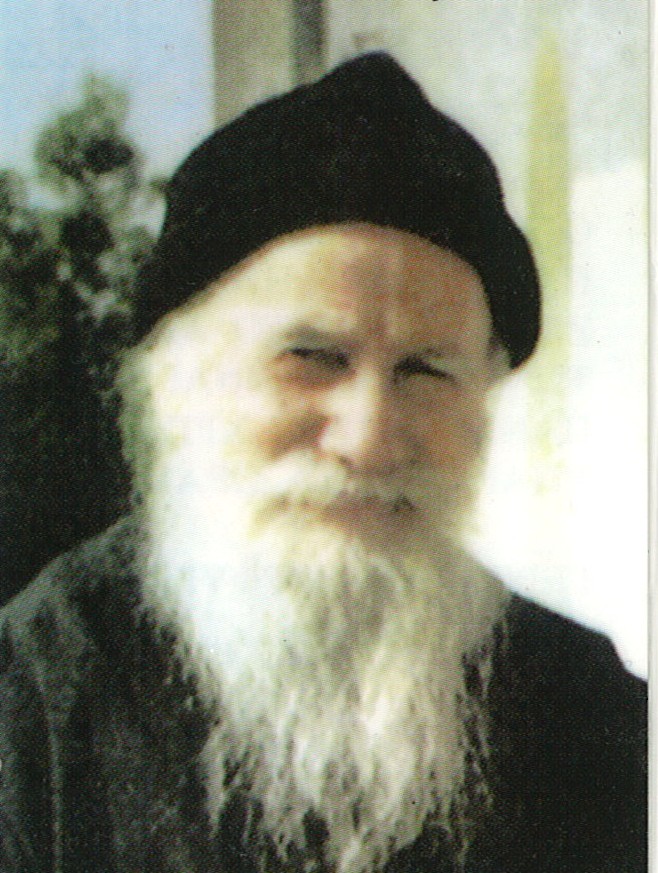
Selections from Wounded by Love: The Life and the Wisdom of Elder Porphyrios, trans. by John Raffan (Limni, Evia, Greece: Denise Harvey, 2005). Image source: Orthodoxwiki.org
The healing of soul and body through the ancient Orthodox Christian Way of Life. Copyright © 2009-2013 by Fr. Symeon Sean Kees
Showing posts with label pain and suffering. Show all posts
Tuesday, January 3, 2012
Wednesday, September 7, 2011
St. Syncletica on Illness & Joy
St. Syncletica of Alexandria is one of the holy Desert Mothers of the 4th century. (She is often referred to as Mother, or "Amma" Syncletica). You can read about her life on the website of the Antiochian Archdiocese. Here is one of her sayings:
"She also said, 'If illness weighs us down, let us not be sorrowful as though, because of illness and the prostration of our bodies we could not sing, for all these things are for our good, for the purification of our desires. Truly fasting and sleeping on the ground are set before us because of our sensuality. If illness then weakens this sensuality the reason for these practices is superfluous. For this is the great asceticism: to control oneself in illness and to sing hymns of thanksgiving to God.'"
The Sayings of the Desert Fathers, trans. by Benedicta Ward (Trappist, KY: Cistercian Publications, 1984), 232.
Wednesday, July 27, 2011
Prayerfully Giving Thanks in All Situations
The Apostle Paul wrote to the Christians in Thessalonica, "Rejoice always, pray without ceasing, in everything give thanks; for this is the will of God in Christ Jesus for you" (Thess. 5.16-18). As Orthodox Christians we are indeed called to always give thanks to God through prayer in all situations, even in difficult situations. We are not near-sighted, but see our present position in terms of our future destination. With this attitude, St. Paul wrote to the Christians in Rome, "I consider that the sufferings of this present time are not worthy to be compared with the glory which shall be revealed in us" (Rom. 8.18).
In one of his homilies, St. John Chrysostom includes a prayer of thanksgiving for all things said by "a certain holy man." We may also use this prayer to express our thankfulness to God whatever the situation:
“I know a certain holy man who prayeth thus. He used to say nothing before these words, but thus,
We give Thee thanks for all Thy benefits bestowed upon us the unworthy, from the first day until the present, for what we know, and what we know not, for the seen, for the unseen, for those in deed, those in word, those with our wills, those against our wills, for all that have been bestowed upon the unworthy, even us; for tribulations, for refreshments, for hell, for punishment, for the kingdom of heaven. We beseech Thee to keep our soul holy, having a pure conscience; an end worthy of thy lovingkindness. Thou that lovedst us so as to give Thy Only-Begotten for us, grant us to become worthy of Thy love; give us wisdom in Thy word, and in Thy fear. Only-Begotten Christ, inspire the strength that is from Thee. Thou that gavest The Only-Begotten for us, and hast sent Thy Holy Spirit for the remission of our sins, if in aught we have wilfully or unwillingly transgressed, pardon, and impute it not. Remember all that call upon Thy Name in truth; remember all that wish us well, or the contrary, for we are all men.
Then having added the Prayer of the Faithful, he there ended; having made that prayer, as a certain crowning part, and a binding together for all. For many benefits doth God bestow upon us even against our wills; many also, yea more, without our knowledge even. For when we pray for one thing, and He doeth to us the reverse, it is plain that He doeth us good even when we know it not.”
* Note: The prayer of the faithful mentioned above is presumably the Lord’s Prayer.
St. John Chrysostom, Homily beginning with Colossians 3.18-25 (Homily X), Homilies on Galatians, Ephesians, Philippians, Colossians, Thessalonians, Timothy, Titus, and Philemon NPNF, Vol. 13. Online here: http://www.ccel.org/ccel/schaff/npnf113.txt
Thursday, July 14, 2011
St. Basil the Great on the Art of Medicine
Selections from St. Basil regarding "Whether recourse to the medical art is in keeping with the practice of piety."
"In as much as our body is susceptible to various hurts, some attacking from without and some from within by reason of the food we eat, and since the body suffers affliction from both excess and eficiency, the medical art has been vouchsafed us by God, who directs our whole life, as a model for the cure of the soul, to guide us in the removal of what is superfluous and in the addition of what is lacking. Just as we would have no need of the farmer's labor and toil if we were living amid the delights of paradise, so also we would not require the medical art for relief if we were immune to disease, as was the case, by God's gift, at the time of Creation before the Fall.. After our banishment to this place, however, and after we had heard the words: 'In the sweat of thy face shalt thou eat thy bread,' through prolonged effort and hard labor in tilling the soil we devised the art of agriculture for the alleviation of the miseries which followed the curse, God vouchsafing us the knowledge and understanding of this art. And, when we were commanded to return to the earth whence we had been taken and were united with the pain ridden flesh doomed to destruction because of sin and, for the same reason, also subject to disease, the medical art was given to us to relieve the sick, in some degree at least."
"Now, the herbs which are the specifics for each malady do not grow out of the earth spontaneously; it is evidently the will of the Creator that they should be brought forth out of the soil to serve our need. Therefore, the obtaining of that natural virtue which is in the roots and flowers, leaves, fruits, and juices, or in such metals or products of the sea as are found especially suitable for bodily health, is to be viewed in the same way as the procuring of food and drink. Whatever requires an undue amount of thought or trouble or involves a large expenditure of effort and causes our whole life to revolve, as it were, around solicitude for the flesh must be avoided by Christians. Consequently, we must take great care to employ this medical art, if it should be necessary, not as making it wholly accountable for our state of health or illness, but as redounding to the glory of God and as a parallel to the care given the soul. In the event that medicine should fail to help, we should not place all hope for the relief of our distress in this art, but we should rest assured that He will not allow us to be tried above that which we are able to bear. Just as in those days the Lord sometimes made clay, and anointed, and bade wash in Siloe, and on other occasions was content with the mere command: ‘I will, be thou made clean’ whereas He left some to struggle against their afflictions, rendering them more worthy of reward by trial, so it also is with us. He sometimes cures us secretly and without visible means when He judges this mode of treatment beneficial to our souls; and again He wills that we use material remedies for our ills, either to instil in us by the prolonged nature of the cure an abiding remembrance of the favor received, or, as I have said, to provide an example for the proper care of the soul. As in the case of the flesh it is essential to eliminate foreign elements and add whatever is wanting, so also, where the soul is concerned, it behooves us to rid ourselves of that which is alien to it and take unto ourselves that which is in accordance with its nature; for 'God made man right and He created us for good works that we might walk in them."
"To place the hope of one's health in the hands of the doctor is the act of an irrational animal. This, nevertheless, is what we observe in the case of certain unhappy persons who do not hesitate to call their doctors their saviors. Yet, to reject entirely the benefits to be derived from this art is the sign of a pettish nature."
"When the favor of a cure is granted us, whether by means of wine mixed with oil, as in the case of the man who fell among the robbers, or through figs, as with Ezechias, we are to receive it with thanksgiving. Besides, we shall view the watchful care of God impartially, whether it comes to us from some invisible source or by a physical agency, the latter, indeed, frequently engendering in us a livelier perception of the favor as coming from the hands of God. Very often, also, the diseases which we contracted were for our correction and the painful remedies we were obliged to submit to formed part of the instruction. Right reason dictates, therefore, that we demur neither at cutting nor at burning, nor at the pains caused by bitter and disagreeable medicines, nor at abstinence from food, nor at a strict regimen, nor at being forced to refrain from that which is hurtful. Nevertheless, we should keep as our objective (again I say it), our spiritual benefit, in as much as the care of the soul is being taught in the guise of an analogy. There is no small danger, however, that we will fall into the error of thinking that every kind of suffering requires medical relief. Not all sicknesses for whose treatment we observe medicine to be occasionally beneficial arise from natural causes, whether from faulty diet or from any other physical origin."
"So, then, we should neither repudiate this art altogether nor does it behoove us to repose all our confidence in it; but, just as in practicing the art of agriculture we pray God for the fruits, and as we entrust the helm to the pilot in the art of navigation, but implore God that we may end our voyage unharmed by the perils of the sea, so also, when reason allows, we call in the doctor, but we do not leave off hoping in God. It seems to me, moreover, that the medical art is no small aid to continency."
St. Basil the Great, “Question 55” in “The Long Rules,” St. Basil: Ascetical Works, trans. by M. Monica Wagner, The Fathers of the Church: A New Translation, Vol. 9 (Wash., D.C.: Catholic University of America Press, 1962), 330-337. The text of this book is available online in various formats: http://www.archive.org/details/fathersofthechur027835mbp.
Thursday, April 7, 2011
"On Healing" by Met. ANTHONY of Sourozh
In the name of the Father, the Son and the Holy Ghost.
Again and again we hear in the Gospel the story of men or women who were healed of their illnesses, and it seems so simple in the Gospel: there is a need, and God meets it. Why is it then — we ask ourselves — that it does not happen to each of us? Each of us is in need of physical healing and of the healing of our soul. And yet, only a few are healed — why? What we miss in the reading of the Gospel is that Christ did not heal people indiscriminately. One person in a crowd was healed; many who were also sick in body or soul, were not. That comes from the fact that, in order to receive the grace of God, so that it acts in us unto the healing of soul or body, or both, we must be open to God — not to the healing, but to God.
Illness is something which we so often wish to banish from our experience, not only because it hampers our life, not only because it is accompanied by pain, but also — I suspect even more — because it reminds us of our frailty, it speaks to us of our mortality. Our body at this moment says to us: You have no power to restore me to health, you can do nothing, I may die on you, I may decay and it will be the end of your earthly life. Isn't that the main reason why we fight for health, we pray for health? And yet, if that is the way in which we ask God to heal us, to restore us to wholeness, we are only asking to be allowed to forget that we are mortal. Instead of being reminded, indeed quickened by this thought, realising that days pass, that time grows short, and that we must — if we want to attain the full stature to which we are called on earth — we must make haste to shake off all that within us is the power of death. Illness and death are not only conditioned by exterior reasons; there are within us resentments, bitterness, hatred, greed — so many other things which kill the quickness of the spirit and prevent us from living now, already now, in eternal life — that eternal life which is just 'Life' in the true sense of the word, life in its fullness.
What can we do then? We must ask ourselves attentive questions, and when we come to God asking Him to heal us, we must first prepare ourselves to be healed. To be healed means not just to be made whole with a view to going back to the kind of life which we had before, it means being made whole in order to start a new life, as though we had become aware that we had died in the healing act of God, aware that all that was the old man in us, this body of corruption of which St. Paul speaks, must go in order for the new man to live. We must be prepared to become that new man through the death of the past in order to start anew like Lazarus who was called out of the grave, not to go back simply to what had been his life before, but having experienced something which is beyond utterance, to re-enter life on new terms. And for us, these terms are Christ, as Paul puts it, 'For me to live — is Christ'.
Are we capable of receiving healing? Are we willing to take upon ourselves the responsibility of being made new in order to enter, again and again, into the world in which we live, with a message of newness — to be light, to be salt, to be joy, to be hope and faith and love, to be surrendered to God.
Let us reflect on it, because we all are sick in one way or another; we all are frail, all are weak, all are incapable of living to the full, even the life which is offered us on earth. Let us reflect on it, and become capable of opening ourselves to God in such a way that He may work His miracle of healing, make us new — but in order for us to bring our newness, indeed God's newness, into the world in which we live. Amen.
This homily, preach on 7/23/1990 is found on the Metropolitan Anthony Library website. The photo is from the same source.
Again and again we hear in the Gospel the story of men or women who were healed of their illnesses, and it seems so simple in the Gospel: there is a need, and God meets it. Why is it then — we ask ourselves — that it does not happen to each of us? Each of us is in need of physical healing and of the healing of our soul. And yet, only a few are healed — why? What we miss in the reading of the Gospel is that Christ did not heal people indiscriminately. One person in a crowd was healed; many who were also sick in body or soul, were not. That comes from the fact that, in order to receive the grace of God, so that it acts in us unto the healing of soul or body, or both, we must be open to God — not to the healing, but to God.
This homily, preach on 7/23/1990 is found on the Metropolitan Anthony Library website. The photo is from the same source.
Monday, February 28, 2011
Learning Patience through Difficulty
St. Paul the Apostle wrote, “And not only that, but we also glory in tribulations, knowing that tribulation produces perseverance; and perseverance, character; and character, hope. Now hope does not disappoint, because the love of God has been poured out in our hearts by the Holy Spirit who was given to us." (St. Paul's Letter to the Romans 5.3-5, NKJV) St. John Chrysostom's commentary:
"And what he says is not 'you should glory,' but we glory, giving them encouragement in his own person. Next since what he had said had an appearance of being strange and paradoxical, if a person who is struggling in famine, and is in chains and torments, and insulted, and abused, ought to glory, he next goes on to confirm it. And (what is more), he says they are worthy of being gloried in, not only for the sake of those things to come, but for the things present in themselves. For tribulations are in their own selves a goodly thing.
How so? It is because they anoint us unto patient abiding. Wherefore after saying we glory in tribulations, he has added the reason, in these words, 'Knowing that tribulation worketh patience.' Notice again the argumentative spirit of Paul, how he gives their argument an opposite turn. For since it was tribulations above all that made them give up the hopes of things to come, and which cast them into despondency, he says that these are the very reasons for confidingness, and for not desponding about the things to come, for 'tribulation,' he says, 'worketh patience.'
St. John Chrysostom’s Homilies on the Epistle to the Romans, NPNF:
Icon of St. John Chrystostom - public domain.
Friday, February 4, 2011
St. John Chrysostom: When You Suffer, Do Not Blaspheme, but Give Thanks
"Some people, if they stumble at all, or are slandered by anyone, or fall ill with a chronic disease, gout or headache or any such ailment, at once begin to blaspheme. They submit to the pain of the disease, but deprive themselves of the benefit. What are you doing, man, blaspheming your benefactor, savior, protector, and guardian? Or do you not see that you are falling down a cliff and casting yourself into the pit of final destruction? You do not make your suffering lighter, do you, if you blaspheme? Indeed, you aggravate it, and make your distress more grievous. For the devil brings a multitude of misfortunes for this purpose, to lead you down into that pit. If he sees you blaspheming he will readily increase the suffering and make it greater, so that when you are pricked you may give up once again; but is he sees you enduring bravely, and giving thanks the more to God, the more the suffering grows worse, he raises the siege at once, knowing that it will be useless to besiege you any more. A dog sitting by the table, if it sees the person who is eating continually throwing it scraps of food from the table, stays persistently; but if stopping at the table once or twice it goes away without getting anything, it stays away thereafter, thinking that the siege is useless. In the same way the devil continually gapes at us; if you throw to him, as to a dog, some blasphemous word, he will take it and attack you again; but if you persevere in thanksgiving, you have choked him with hunger, you have chased him away and thrown him back from you. But, you say, you cannot keep silent when you are pricked by distress. I certainly do not forbid you to make a sound, but give thanks instead of blasphemy, worship instead of despair. Confess to the Lord, cry out loudly in prayer, cry out loudly glorifying God. In this way your suffering will be lightened, because the devil will pull back from your thanksgiving and God's help will be at your side. If you blaspheme, you have driven away God's assistance, made the devil more vehement against you, and involved yourself even more in suffering; but if you give thanks, you have driven away the plots of the evil demon, and you have drown the care of God your protector to yourself."
St. John Chrysostom, "Third Sermon on Lazarus and the Rich Man," On Wealth and Poverty, trans. by Catharine P. Roth (Crestwood, NY: St. Vladimir's Seminary Press, 1984), 69-70.
Monday, December 13, 2010
Saturday, March 6, 2010
Elder Porphyrios: Overcoming Depression
"Nowadays people often feel sadness, despair, lethargy, laziness, apathy, and all things satanic. They are downcast, discontent and melancholy. They disregard their families, spend vast sums on psychoanalysts and take anti-depressants. People explain this as 'insecurity.' Our religion believes that these states derive from satanic temptation. Pain is a psychological power which God implanted in us with a view to doing us good and leading us to love, joy, and prayer. Instead of this, the devil succeeds in taking this power from the battery of our soul and using it for evil. He transforms it into depression and brings the soul into a state of lethargy and apathy. He torments us, takes us captive and makes us psychologically ill.
There is a secret. Turn the satanic energy into good energy. This is difficult and requires some preparation. The requisite preparation is humility. With humility you attract the grace of God. You surrender yourself to the love of God, to worship and to prayer. But even if you do all in the world, you achieve nothing if you haven't acquired humility. All the evil feelings, insecurity, despair and disenchantment, which come to take control of the soul, disappear with humility. The person who lacks humility, the egotist, doesn't want you to get in the way of his desires, to make any criticism of him or tell him what to do. He gets upset, irritated and reacts violently and is overcome by depression.
This state is cured by grace. The soul must turn to God's love. The cure will come when we start to love God passionately. Many of our saints transformed depression into joy with their love for Christ. That is, they took this power of the soul which the devil wished to crush and gave it to God and they transformed it into joy and exultation. Prayer and worship gradually transform depression and turn it into joy, because the grace of God takes effect. Here you need to have the strength to attract the grace of God which will help you to be united with Him. Art is required. When you give yourself to God and become one with him, you will forget the evil spirit which drags at you from behind, and this spirit, when it is disdained, will leave. And the more you devote yourself to the Spirit of God, the less you will look behind to see the spirit that is dragging at you. When grace attracts you, you will be united with God. And when you unite yourself to God and abandon yourself to Him, everything else disappears and is forgotten and you are saved. The great art, the great secret, in order to rid yourself of depression and all that is negative is to give yourself over to the love of God.
Something which can help a person who is depressed is work, interest in life. The garden, plants, flowers, trees, the countryside, a walk in the open air -- all these things tear a person away from a state of inactivity and awake other interests. They act like medicines. To occupy oneself with the arts, with music and so on, is very beneficial. The thing that I place top of the list, however, is interest in the Church, in reading Holy Scripture and attending services. As you study the words of God you are cured without being aware of it.
Let me tell you about a girl who came to me. She was suffering from dreadful depression. Drugs had no effect. She had given up everything -- her work, her home, her interests. I told her about the love of Christ which takes the soul captive because the grace of God fills the soul and changes it. I explained to her that the force which takes over the soul and transforms the power of the soul into depression is demonic. It throws the soul to the ground, torments it and renders it useless. I advised her to devote herself to things like music which she had formerly enjoyed. I emphasized, however, most of all her need to turn to Christ with love. I told her, moreover, that in our Church a cure is to be found through love for God and prayer, provided this is done with all the heart."
A selection from Wounded by Love: The Life and the Wisdom of Elder Porphyrios, trans. by John Raffan (Limni, Evia, Greece: Denise Harvey, 2005), 178-179.
Saturday, February 13, 2010
The Flame of Divine Love: The Last Judgment
In Western society, many people tend to think of God and theology in legalistic terms. We may encounter those who think that God is an angry Judge waiting to punish them for breaking His laws. Contemporary movies and television programs have contributed the erroneous popular vision of God, judgment, Heaven, and hell. American misconceptions regarding hell likely find root, directly or indirectly, in the picture presented in Dante Alighieri’s Divine Comedy and religious ideas generally present in Roman Catholicism and Protestantism. Within the Orthodox Way, however, theological understanding is primarily rooted in the Inexhaustible Love of God. By teaching the true Orthodox vision of the Kingdom of Heaven and hell, inasmuch as we can comprehend it, within a culture that tends to compartmentalize knowledge and disconnect theological ideas from every-day life, we can help people to acquire an understanding that fits harmoniously within the whole Orthodox theological worldview, embodied in the comprehensive spiritual life of the Church.
Before the beginning of Great Lent, a period of preparation for Holy Pascha (Easter), we commemorate the Last Judgment when we all will stand before God:
Before we commemorate the Last Judgment, we are prepared by the Sunday of the Tax Collector and the Pharisee, reminding us that the person accepted by God is not the outwardly religious Pharisee, who is filled with pride and judges others as worse sinners than himself, but the humble soul who, feeling the depth of his own spiritual sickness, sincerely and prayfully turns his heart to God in repentance. We are also prepared by the Sunday of the Prodigal Son, which teaches us that no matter how far we drift from God and squander the good things we have received, if we repent (turning away from what is unnatural toward God), our Loving Father is ready to run toward us, warmly embrace us, and receive us back with joy.
God is Unconditional Love and God is a Consuming Fire. God is Love and is Fire. Love and Fire are One. There is no contradiction here. God's Uncreated Love is Uncreated Fire. In the prayers of the Church, we ask God not to consume us because of our sins, but to consume our sickness, our deadness, "the thorns of our transgressions," and to purify and illumine our souls. For those who seek healing, the Uncreated Fire is purifying and transformative. The Fire consumes all that is unhealthy and barren. The Fire of God's Love does not cause pain for the purified and illumined, but is the moist breeze of Paradise and refreshing River of Life that brings everlasting joy and peace.
Those who are full of selfishness and pride will not experience God's Love as Paradise. The unloving will be consumed by Pure Love. St. Isaac the Syrian explained that
St. Gregory the Theologian wrote from the same perspective, “O Trinity, Whom I have been granted to worship and proclaim, Who will some day be known to all, to some through illumination and to others through punishment!” (3) Likewise, St. Basil the Great said,
Those whose hearts have been purified, their souls healed, and are filled with divine love become flames united with the Uncreated Flame of Unquenchable Love. Our goal in this life is summarized in the words of an ancient spiritual father, Abba Joseph, who said, "If you will, you can become all flame."
As the unloving, proud, and impure will be tortured by the presence of Divine Love, they will also be abused by their own souls, a result of their refusal to accept the healing offered to them by their compassionate Creator and Physician. In his “Letter to Publius,” St. Ephrem the Syrian noted that “the gehenna [hell] of the wicked consists in what they see, and it is their very separation that burns them, and their mind acts as the flame.” (5) He explained that “the hidden judge which is seated in the discerning mind has spoken, and has become for them the righteous judge, who beats them without mercy with torments of contrition” and “saliently accuses and quietly pronounces sentence upon them.” (6) The “inner intelligence has been made the judge and the law, for it is the embodiment of the shadow of the law, and it is the shadow of the Lord of the Law.” (7)
The Last Judgment is a reality for each of us, but we are reminded of this reality within the Church as we are also reminded of the Way of the eternal kingdom of God: humility, repentance, love, and prayer. God has planted the Church for the our healing so that we may be united with Him and become radiant torches of Divine Love, Peace, and Joy. For those seeking the healing of their souls and union with God, the images of the Last Judgment assist us in finding humility and focusing on the condition of our own souls with rather than judging others. Pride is a great enemy that keeps us from seeing ourselves as we really are with sobriety. We live in a culture wherein we are constantly being tempted to act and think in ways unnatural to our human nature and that are contrary to the path of good health.
The fear of hell can serve to bring us to repentance. The highest reason for pursuing salvation is love for God, not fear of punishment, but because of our spiritual delusion and the sickness in our souls, fear of separation from God in hell can serve as motivation to overcome our laziness and pursue the Way of spiritual healing that God has given us. Always being mindful of God's love, we should remember the words of St. Silouan the Athonite, "Keep your mind in hell and despair not."
Since the Last Judgment is a reality, we should not downplay the necessity of repentance as an essential aspect of the healing process in this life. When someone is facing physical sickness and death, they may be more receptive to hearing about repentance than at other times. Within an Orthodox context, we can help patients facing physical sickness and death achieve deep healing in their souls so that they may experience the Kingdom of Heaven (even in this life) and be resurrected in their physical bodies, not to judgment and spiritual death, but eternal life and joy in body and soul.
While some may not give much thought to the Last Judgment until they face their own mortality, others may possess a rational fear of hell, but without knowledge of God's love. They may see God as a Judge, but not as a loving Father. (Perhaps their concept of God has been twisted by exposure to heretical doctrine and/or unhealthy human relationships.) In such cases, we must help these individuals learn about God's unconditional love for mankind (philanthropia), the Orthodox Way as the path of healing, and our goal of becoming purified, illumined, and united through the unquenchable flames of Divine Love.
(1) Glory at "Lord, I have cried," Vespers, Sunday of the Last Judgment
(2) Alexander Kalomiros, The River of Fire, presented at the 1980 Orthodox Conference, sponsored by St. Nectarios American Orthodox Church, Seattle, WA (Seattle: St. Nectarios Press, 1980), quoting St. Isaac the Syrian, Homily 48. The text of The River of Fire is available at http://www.stnectariospress. com. See also Lazar, 8-9.
(3) Metropolitan Hierotheos of Nafpaktos, Life After Death, trans. by Esther Williams (Levadia, Greece: Birth of the Theotokos Monastery, 1996), 259, quoting St. Gregory the Theologian, Or. 23.13, On peace 3, PG 35, 1165B.
(4) Archbishop Lazar Puhalo, On the Nature of Heaven and Hell According to the Holy Fathers (Dewdbey, Canada: Synaxis Press, 1995), 9, quoting St. Basil the Great, “Homily on Psalms,” 28.6; See also Met. Hierotheos, 257.
(5) Ibid., 7-8, quoting St. Ephrem the Syrian, “Letter to
Publios,” para. 21-23.
(6) Ibid., 8
(7) Ibid.
Before the beginning of Great Lent, a period of preparation for Holy Pascha (Easter), we commemorate the Last Judgment when we all will stand before God:
When the thrones are placed, and the books are opened, and God sitteth for judgment, O what a fearful sight, as the angels stand in fright, and thy river of fire floweth by! What then shall we do, we men who have come under condemnation by reason, of the multitude of our sins? And as we hear him call the blessed of his Father to his kingdom, and send the sinners to punishment, who will bear that terrible verdict? Wherefore, O Savior and Lover of mankind, alone King of the ages, hasten to me before the end with repentance, and have mercy upon me. (1)
Before we commemorate the Last Judgment, we are prepared by the Sunday of the Tax Collector and the Pharisee, reminding us that the person accepted by God is not the outwardly religious Pharisee, who is filled with pride and judges others as worse sinners than himself, but the humble soul who, feeling the depth of his own spiritual sickness, sincerely and prayfully turns his heart to God in repentance. We are also prepared by the Sunday of the Prodigal Son, which teaches us that no matter how far we drift from God and squander the good things we have received, if we repent (turning away from what is unnatural toward God), our Loving Father is ready to run toward us, warmly embrace us, and receive us back with joy.
God is Unconditional Love and God is a Consuming Fire. God is Love and is Fire. Love and Fire are One. There is no contradiction here. God's Uncreated Love is Uncreated Fire. In the prayers of the Church, we ask God not to consume us because of our sins, but to consume our sickness, our deadness, "the thorns of our transgressions," and to purify and illumine our souls. For those who seek healing, the Uncreated Fire is purifying and transformative. The Fire consumes all that is unhealthy and barren. The Fire of God's Love does not cause pain for the purified and illumined, but is the moist breeze of Paradise and refreshing River of Life that brings everlasting joy and peace.
Those who are full of selfishness and pride will not experience God's Love as Paradise. The unloving will be consumed by Pure Love. St. Isaac the Syrian explained that
those who are suffering in hell, are suffering in being scourged by love.... It is totally false to think that the sinners in hell are deprived of God's love. Love is a child of the knowledge of truth, and is unquestionably given commonly to all. But love's power acts in two ways: it torments sinners, while at the same time it delights those who have lived in accord with it. (2)
St. Gregory the Theologian wrote from the same perspective, “O Trinity, Whom I have been granted to worship and proclaim, Who will some day be known to all, to some through illumination and to others through punishment!” (3) Likewise, St. Basil the Great said,
I believe that the fire prepared for the punishment of the devil and his angels is divided by the voice of the Lord. Thus, since there are two capacities in fire, one of burning and the other of illuminating, the fierce and scourging property of the fire may await those who deserve to burn, while illuminating and radiant warmth may be reserved for the enjoyment of those who are rejoicing. (4)
Those whose hearts have been purified, their souls healed, and are filled with divine love become flames united with the Uncreated Flame of Unquenchable Love. Our goal in this life is summarized in the words of an ancient spiritual father, Abba Joseph, who said, "If you will, you can become all flame."
As the unloving, proud, and impure will be tortured by the presence of Divine Love, they will also be abused by their own souls, a result of their refusal to accept the healing offered to them by their compassionate Creator and Physician. In his “Letter to Publius,” St. Ephrem the Syrian noted that “the gehenna [hell] of the wicked consists in what they see, and it is their very separation that burns them, and their mind acts as the flame.” (5) He explained that “the hidden judge which is seated in the discerning mind has spoken, and has become for them the righteous judge, who beats them without mercy with torments of contrition” and “saliently accuses and quietly pronounces sentence upon them.” (6) The “inner intelligence has been made the judge and the law, for it is the embodiment of the shadow of the law, and it is the shadow of the Lord of the Law.” (7)
The Last Judgment is a reality for each of us, but we are reminded of this reality within the Church as we are also reminded of the Way of the eternal kingdom of God: humility, repentance, love, and prayer. God has planted the Church for the our healing so that we may be united with Him and become radiant torches of Divine Love, Peace, and Joy. For those seeking the healing of their souls and union with God, the images of the Last Judgment assist us in finding humility and focusing on the condition of our own souls with rather than judging others. Pride is a great enemy that keeps us from seeing ourselves as we really are with sobriety. We live in a culture wherein we are constantly being tempted to act and think in ways unnatural to our human nature and that are contrary to the path of good health.
The fear of hell can serve to bring us to repentance. The highest reason for pursuing salvation is love for God, not fear of punishment, but because of our spiritual delusion and the sickness in our souls, fear of separation from God in hell can serve as motivation to overcome our laziness and pursue the Way of spiritual healing that God has given us. Always being mindful of God's love, we should remember the words of St. Silouan the Athonite, "Keep your mind in hell and despair not."
Since the Last Judgment is a reality, we should not downplay the necessity of repentance as an essential aspect of the healing process in this life. When someone is facing physical sickness and death, they may be more receptive to hearing about repentance than at other times. Within an Orthodox context, we can help patients facing physical sickness and death achieve deep healing in their souls so that they may experience the Kingdom of Heaven (even in this life) and be resurrected in their physical bodies, not to judgment and spiritual death, but eternal life and joy in body and soul.
While some may not give much thought to the Last Judgment until they face their own mortality, others may possess a rational fear of hell, but without knowledge of God's love. They may see God as a Judge, but not as a loving Father. (Perhaps their concept of God has been twisted by exposure to heretical doctrine and/or unhealthy human relationships.) In such cases, we must help these individuals learn about God's unconditional love for mankind (philanthropia), the Orthodox Way as the path of healing, and our goal of becoming purified, illumined, and united through the unquenchable flames of Divine Love.
(1) Glory at "Lord, I have cried," Vespers, Sunday of the Last Judgment
(2) Alexander Kalomiros, The River of Fire, presented at the 1980 Orthodox Conference, sponsored by St. Nectarios American Orthodox Church, Seattle, WA (Seattle: St. Nectarios Press, 1980), quoting St. Isaac the Syrian, Homily 48. The text of The River of Fire is available at http://www.stnectariospress.
(3) Metropolitan Hierotheos of Nafpaktos, Life After Death, trans. by Esther Williams (Levadia, Greece: Birth of the Theotokos Monastery, 1996), 259, quoting St. Gregory the Theologian, Or. 23.13, On peace 3, PG 35, 1165B.
(4) Archbishop Lazar Puhalo, On the Nature of Heaven and Hell According to the Holy Fathers (Dewdbey, Canada: Synaxis Press, 1995), 9, quoting St. Basil the Great, “Homily on Psalms,” 28.6; See also Met. Hierotheos, 257.
(5) Ibid., 7-8, quoting St. Ephrem the Syrian, “Letter to
Publios,” para. 21-23.
(6) Ibid., 8
(7) Ibid.
Wednesday, February 3, 2010
St. Innocent of Alaska - Spiritual Sickness, Pain, and Healing
This selection is from Indication of the Way into the Kingdom of Heaven by St. Innocent of Alaska (Jordanville, NY: Holy Trinity Monastery, 2006), 29-30. This text was originally written in the Aleut language.
Read about the life of St. Innocent of Alaska (OCA.org) or listen to an account of his life on Ancient Faith Radio.
The above icon of St. Innocent is from the website of the Orthodox Church in America (OCA.org). The OCA is a jurisdiction of the Orthodox Church with strong historical and cultural connections to the Russian Orthodox Church.
Subscribe to:
Comments (Atom)


